
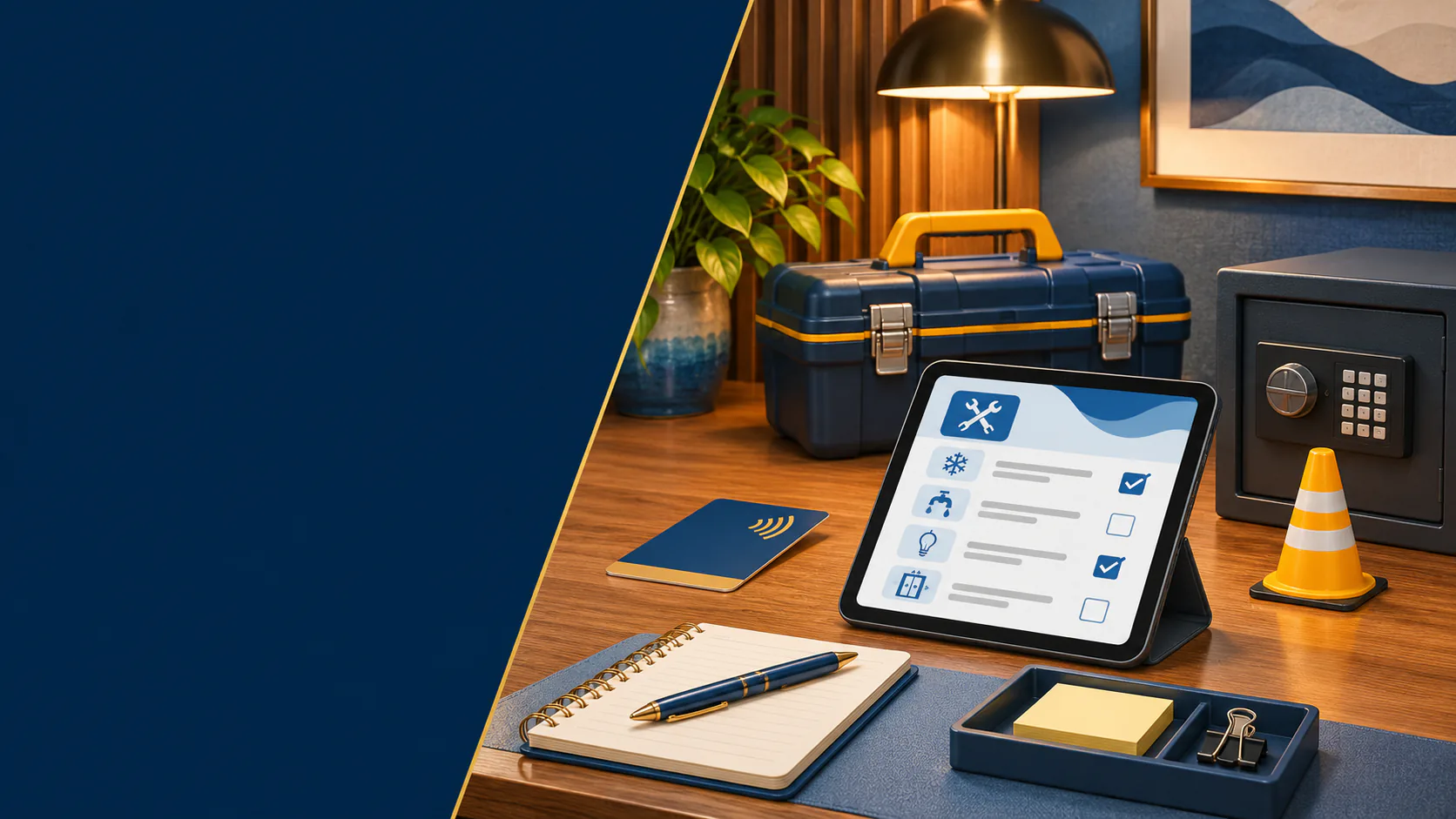
Record the observed symptom, location, time and operational impact, with an assigned recipient and acceptance check. Reporting a fault is different from diagnosing it; a technician's completion message is different from a room being ready again.
“Air conditioner broken—please check” may start a conversation but does not show which stay is affected, whether the guest has been updated or who checks the result. This guide proposes a coordination record, not repair instructions or a rule about who pays.
Report observations, not an unverified diagnosis
Describe what happened during normal use and where and when it was noticed. Avoid naming a failed component before a competent person assesses it. Photographs should locate the issue without exposing guest information or access credentials.
For an urgent risk, follow the property's emergency plan and assigned responsibilities. Do not experiment with electrical, water or mechanical systems merely to collect additional evidence.
Make the work order transferable
| Field | Record |
|---|---|
| Reference | One identifier across conversations |
| Location and time | Room or area and observation time |
| Symptom | What was actually observed |
| Impact | Affected use and relevant people |
| Room decision | Who assesses continued use |
| Work owner | Technician or coordinator who has accepted the task |
| Dependency | Parts, access or approval outstanding |
| Next update | Agreed progress checkpoint |
| Closure test | Relevant functional check and competent checker |
The technician contact and guest contact can be different people, but should use the same reference and current status.
Assign the room-use decision
The reporter may not be authorised to decide whether a room remains usable. Route the evidence to the responsible person. If sales must stop, review reservations and communicate with the inventory owner. A maintenance record should not be assumed to remove a room from every selling system automatically.
Track dependencies instead of “in progress”
A job awaiting parts needs a coordinator and next update. Do not promise a completion date the technician has not confirmed. Preserve revised dates and reasons so the guest-facing team stops using an obsolete estimate.
In a fictional case, equipment behaves intermittently and the technician needs a replacement part. The coordinator records the dependency and updates the room lead. The assigned room-use decision-maker still owns that decision; acceptance of the repair task does not make the room ready.
Close after an appropriate check
After the technician reports completion, a competent person should check the relevant function and record evidence and limits. If the symptom occurs only under certain conditions, state what the check covered and what still needs observation. One successful activation does not establish a permanent fix.
The room team then handles cleanliness and related status under its procedure. If the symptom returns, reopen or link the follow-up to the earlier work order. Do not erase the history by creating an unrelated record.
Closure checklist
- The check addresses the original symptom and agreed scope.
- The checker is competent for the task.
- Evidence goes beyond a completion message.
- Limitations and remaining observation are recorded.
- Guest and room teams receive the same update.
- An identified person owns the return-to-use decision.
Frequently asked questions
Must every job have photographs?
Use evidence appropriate to the job. A photograph can identify location but does not prove function. Do not create risk to obtain it.
Who pays for the repair?
This guide does not decide that. Confirm the applicable scope and agreement before authorising work; a tracking register does not replace cost responsibility arrangements.
Start with one open job
Choose one unresolved job and bring the messages and observations into one record. Identify who is following up, what the team is waiting for and when the record will be reviewed. If an answer is not yet confirmed, say so rather than guessing. Ask the room owner and maintenance coordinator to check that they understand the same status.
At the shift handover, pass on open jobs with the follow-up owner and the question still awaiting an answer. Keep guest details and access codes out of a general work order. This is an editorial starting point to adapt to the property’s permissions and procedures, not a universal repair SOP.
Connect maintenance with hotel operations
To clarify maintenance coordination with the operations team, review Kines property management service scope and prepare questions from your property’s example to discuss an appropriate scope.
Bring an anonymised outstanding-work example to LINE OA @kines. Read the hotel management scope overview for context.